Development
DEVLOG-1: An Initial Dive into Orion's Gate Studio's Development Pipeline
June 24, 2025 / Orion's Gate Team
Great games are equal parts art, engineering, and economics. At Orion's Gate Studio we weave these strands together with a carefully curated tech stack that spans front-end design, back-end micro-services and on-chain tokenomics. The result is a pipeline that lets designers iterate rapidly, engineers scale confidently, and players own a real stake in the worlds we build. Below we break down each layer of that pipeline and share the open-source best practices that inspire our approach.
Front-End Development Stack
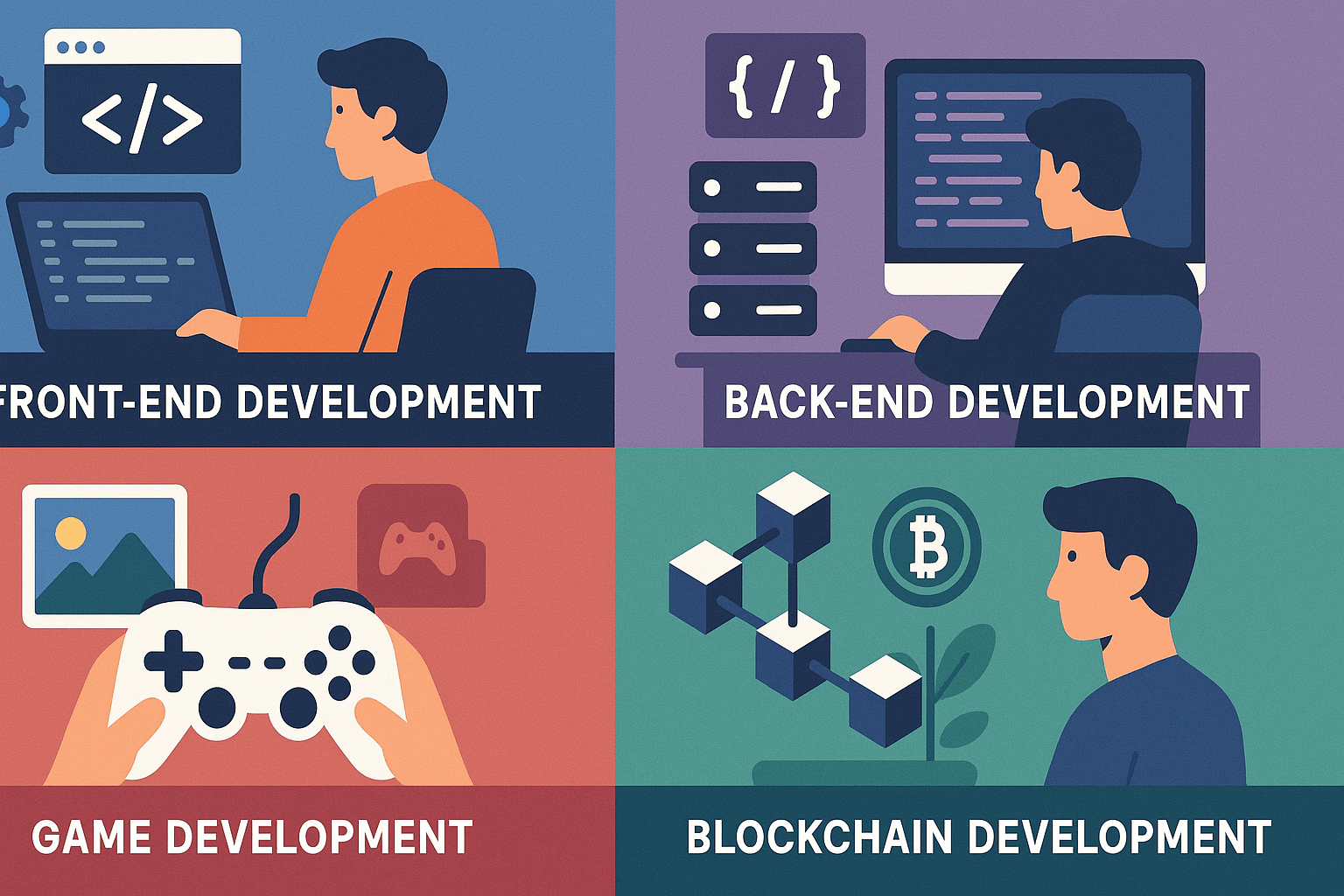
From our company website to the ICO landing page we are using React-Powered Interfaces. Hooks provide lightweight state management, while lazy loading keeps initial bundle sizes trim for fast first paint.
Our front-end workflow revolves around a carefully chosen stack of tools and technologies: day-to-day development happens in Cursor-complete with MCP setups such as figma-developer-mcp and Magic MCP-while version control is handled through the git CLI and GitHub Desktop. We test and debug APIs with Insomnia, jot structured notes in Obsidian's Markdown vaults, and containerize everything via Docker Desktop with docker-compose at the command line.
On the technology side, our applications are built with Next JS for server-side rendering; Axios drives HTTP requests and responses; styling is handled by Tailwind CSS and Radix UI; Web3 functionality comes from the Reown-Wagmi-Viem trio; TanStack Query manages client state; the Supabase client integrates data services; ESLint and Prettier enforce a consistent, optimized codebase; and Framer Motion adds fluid animation.
To accelerate every stage, we lean on AI assistants: Claude 3.5 Sonnet and Gemini 2.5 Pro boost code completion; ChatGPT 4.5 supports documentation and planning; Sora, Midjourney, and 21st Magic Chat generate web images and SVGs; and Google Flow streamlines video creation.
Back-End Development Team
On the back-end we rely on a deliberately modern, future-proof architecture that revolves around C# and .NET Core micro-services, each aligned to a clear domain boundary so new features can ship independently without ripple effects. Supabase anchors the data layer with a rock-solid Postgres core, built-in row-level security, instant REST and GraphQL endpoints, and real-time subscriptions that keep gameplay events, admin dashboards and analytics streams perfectly in sync.
All traffic then rides Cloudflare's global edge: TLS is terminated close to users, intelligent caching collapses duplicate requests, Workers inject dynamic logic right at the edge, and the Web Application Firewall shields us from DDoS assaults and malicious bots-delivering sub-100 ms latency in most regions while off-loading pressure from the origin.
To automate every touchpoint with our community, we orchestrate marketing and engagement workflows in n8n: alpha-join sign-ups flow straight into tagged audiences, newsletter content is assembled from live game data, and behavioural triggers fire targeted campaigns that nurture retention, all versioned and auditable in a single visual canvas.
Brevo powers transactional and bulk email, giving us granular deliverability controls, advanced templating and detailed engagement metrics.
Layered across this stack are advanced generative AI models-Claude 4 and Gemini 2.5-that draft database migration scripts, generate API documentation stubs, sift through log noise to surface anomalies, and even co-create lore snippets for in-game events. By fusing robust engineering practices with intelligent automation and AI-assisted creativity, we ship scalable back-end services that keep pace with our players' ambitions and our studio's rapid development cadence.
Blockchain Development Team
Our blockchain development stack begins at the contract layer with Solidity, where we author everything from simple ERC-20 tokens to intricate in-game asset registries. Hardhat drives the entire contract lifecycle-compiling, unit-testing, forking main-net state, and automating deployments-while OpenZeppelin's battle-tested libraries give us rock-solid implementations for access control, upgradeability, and safe math. We interact with those contracts through Ethers.js, wiring them into our tooling and gameplay services, and we validate real-world behaviour on the BSC Testnet long before a single transaction reaches main-net.
On the client side we keep things intentionally lean: vanilla JavaScript orchestrates a responsive HTML5/CSS3 interface that stays fast even on low-power devices. MetaMask provides wallet connectivity, and a generic Web3 provider funnels signed transactions and on-chain reads straight to the contract layer-ensuring any player with a browser can spin up, connect, and start transacting in seconds.
Serverless infrastructure ties everything together. Cloudflare Workers-written with the Hono.js framework-act as lightweight back-end endpoints for matchmaking, signature validation, and rate limiting. Static assets live on Cloudflare Pages for global, low-latency delivery, while Cloudflare KV offers a durable key-value store we tap for caching non-critical metadata like leaderboard snapshots and daily challenge seeds. Node.js serves as the local development runtime, mirroring the production Worker environment for hassle-free debugging.
Developer experience is streamlined with Wrangler CLI for zero-downtime deployments, Git for version control, VS Code/Cursor as our primary editor, and a healthy dose of terminal scripting to automate repetitive tasks. We enrich on-chain data with BSC RPC endpoints, pull real-time price feeds from CoinGecko, and hit JSON-RPC directly for low-level contract calls when speed really matters.
Finally, we augment the whole workflow with AI assistance: Claude helps shape contract architecture and troubleshoot hairy edge-cases; GitHub Copilot autocompletes boilerplate and flags subtle errors before tests even run; and ChatGPT short-circuits documentation dives, surfacing ABI quirks or Cloudflare KV limits in a single prompt. The result is a pipeline that lets us ship secure, player-friendly blockchain features at the cadence of live-ops game development.
Game-Asset Production
For game-asset creation and level development we draw on a full spectrum of industry-standard tools.
Adobe Photoshop anchors our 2-D pipeline, driving everything from concept art and digital paintings to social-media visuals and print collateral. Adobe Illustrator handles all vector work-logo marks, poster layouts, and any graphics that demand infinite scalability. Tools like Aseprite are used for pixel art creation.
When motion enters the picture, we switch to Adobe After Effects, where we craft 2-D character animations, kinetic typographic pieces, and product-promo videos that integrate seamlessly. Blender takes center stage for sculpting high-detail characters, giving artists the freedom to iterate quickly before re-topology.
Finally, everything funnels into Unity, where we lay out levels, implement core gameplay code, and leverage the Universal Render Pipeline to generate photorealistic walkthroughs and cinematic fly-throughs for our architectural projects.