
Community
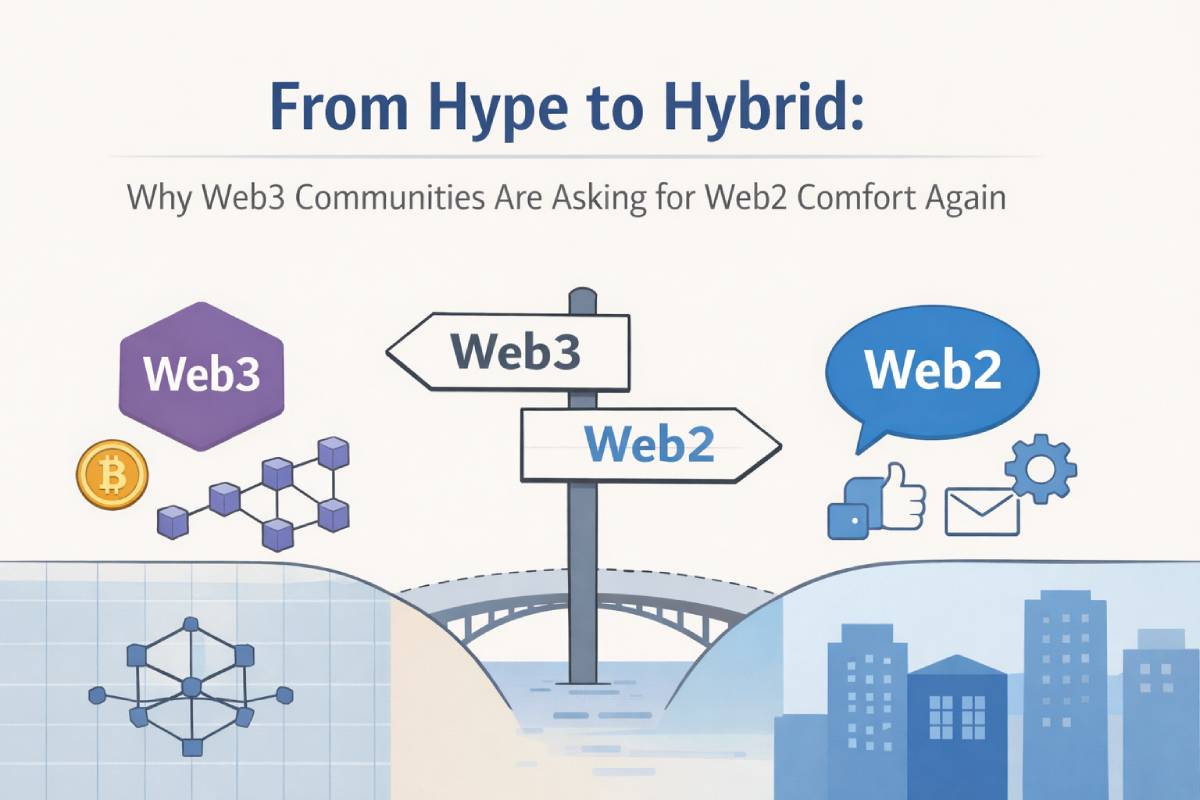
From Hype to Hybrid: Why Web3 Communities Are Asking for Web2 Comfort Again
April 14, 2026 / Orion's Gate Team
For years, web3 gaming was framed as the future of digital ownership, player economies, and community-led ecosystems. But in 2025 and 2026, the tone around web3 has noticeably shifted. Communities are more cautious, players are more selective, and many people now openly ask whether web3 was just a temporary hype cycle. At the same time, web2 platforms, login systems, and familiar user flows are regaining influence. That does not mean web3 is disappearing. It means the market is maturing. The strongest direction now is not pure web2 or pure web3. It is hybrid design: systems that keep the accessibility, safety, and familiarity of web2 while selectively using web3 where it adds real value, such as ownership, tradable assets, verifiable rewards, and community governance [1][2][3]. For teams building long-term communities, this is becoming one of the most practical paths forward.
Why people think web3 is losing popularity
Part of the perception comes from the numbers. Industry reports showed weaker NFT trading performance in 2024 compared with 2023, while broader dapp activity also cooled during parts of 2025 [1][3]. At the same time, investment flows into web3 gaming became more cautious, even as the sector continued building through the downturn [2].
But the bigger issue is not only market performance. It is trust.
Many community members now associate web3 with friction and risk: complicated wallets, gas fees, scams, confusing marketplaces, and ecosystems that sometimes seemed more focused on speculation than on gameplay. That skepticism is measurable. Pew Research found that a majority of U.S. adults had little or no confidence in the safety and reliability of cryptocurrency systems [4]. Meanwhile, both the FBI and Chainalysis reported massive losses tied to crypto scams, reinforcing the idea that the space still feels unsafe for mainstream users [5][6].
This is why the “web3 is old hype” argument keeps returning in community discussions. It is not only about technology fatigue. It is about broken trust.
Why web2 is gaining power again
Web2 never stopped controlling the most important parts of distribution: app stores, social platforms, payment flows, and community hubs. Even when web3 projects grew, they still depended on web2 spaces like Discord, Google Play, Apple ecosystems, and social media to reach users.
That platform power matters. Steam's earlier ban on crypto- and NFT-related games became a defining example of how quickly mainstream channels can reject blockchain-native models [7]. Google Play later took a more flexible approach by allowing certain blockchain-based experiences, but only under strict transparency and policy requirements [8][9]. In both cases, the message was clear: web2 still sets the conditions for mass access.
Communities recognize this. They know that familiar onboarding, social logins, easy payments, and trusted ecosystems still create the lowest-friction path into games. So when players say “we are going back to web2,” what they often mean is this: we want smoother systems, less risk, and less effort before we decide to care.
What communities are really asking for
The feedback many game teams receive now is not necessarily anti-web3. It is anti-friction.
Players want:
easy sign-up instead of wallet setup,
clear progression instead of token confusion,
safe community participation instead of scam anxiety,
useful digital ownership instead of forced financialization.
That is exactly why hybrid systems are becoming more attractive. They let players enter through familiar web2 flows, then gradually discover web3 features only when those features actually improve the experience [10][11].
This matters especially for communities. If the first impression feels technical, risky, or transactional, many users leave before they ever form an emotional connection with the game world. But if onboarding feels easy and social, communities are more willing to engage first and learn the deeper systems later.
Why hybrid systems will become more popular
Hybrid systems are winning because they align better with how people actually behave.
A good hybrid model does not force every player to think like a crypto-native user. Instead, it uses web2 for what web2 already does well-identity, access, social familiarity, and low-friction participation-while using web3 only where it adds a meaningful layer of value [10][11][12].
This model is already visible in several real-world examples:
Immutable Passport is built around social and email sign-in, with no seed phrase and no separate wallet download required. That is a strong example of web3 infrastructure being hidden behind a web2-style login experience [10].
Sorare introduced a Cash Wallet that supports fiat currencies such as EUR, GBP, and USD, reducing the need for users to interact with crypto directly during core marketplace activity [13][14].
NFL Rivals from Mythical Games showed how blockchain-enabled economies can be introduced gradually through mobile-friendly systems, in-game credits, and phased marketplace features rather than overwhelming users with crypto complexity upfront [15][16].
Even outside games, large consumer brands experimented with hybrid models. Starbucks Odyssey connected NFT-based rewards to an existing loyalty framework, while Reddit Collectible Avatars embedded blockchain-backed assets into a familiar social platform experience [17][18][19][20]. Not all of these experiments lasted in their original form, but that actually proves an important point: mainstream adoption does not come from “more crypto.” It comes from integrating blockchain carefully into products people already understand.
What this means for community development
For communities, hybrid design is not just a technical solution. It is a cultural one.
A hybrid community system can:
lower the barrier to entry,
reduce fear around wallets and scams,
keep participation inside familiar spaces like Discord,
add blockchain-backed ownership or governance only when useful,
make communities feel inclusive instead of exclusive.
This is especially important in game development. If your community believes web3 is too risky or outdated, pushing harder on “pure web3” can create resistance. But presenting a hybrid model changes the conversation. Instead of asking players to commit to an ideology, you are offering them a better user experience.
That creates healthier communities because people can enter for the game, the art, the friendships, or the progression loop first. Then, over time, they can engage with ownership, voting, trading, or identity layers in ways that feel optional and meaningful [11][12].
A practical direction for the future
The future is likely not a full retreat from web3, and it is not a complete return to old web2 models either. It is a blend.
The most sustainable communities will probably be built around:
web2 onboarding for speed and familiarity,
embedded or invisible wallets for lower friction,
off-chain social participation in spaces users already trust,
selective on-chain utility for ownership, rewards, and governance,
transparent trust and safety systems that reduce community fear [5][6][10][12].
In other words, hybrid systems can help restore confidence without abandoning innovation.
Conclusion
Web3 is not dead, but the era of unquestioned hype is clearly over. Communities are more skeptical now, and that skepticism is rooted in real issues: weaker market momentum, poor onboarding, platform restrictions, and ongoing trust concerns [1][4][5]. At the same time, web2 is regaining strength because it still owns the most usable and familiar parts of the internet experience.
That is why hybrid systems matter.
They offer a path that respects what communities are actually saying: “We do not want to fight the technology just to enjoy the product.” For game teams, that makes hybrid design more than a compromise. It becomes a strategic response to community sentiment, platform reality, and long-term product growth.
For projects planning to integrate web2 systems alongside web3 features, this is not a step backward. It may be the smartest step forward.
References
DappRadar — Dapp Industry Report 2024 Overview.
DappRadar — State of Blockchain Gaming in Q1 2025.
DappRadar — State of the Dapp Industry Q3 2025.
Pew Research Center — Majority of Americans Aren’t Confident in the Safety and Reliability of Cryptocurrency.
FBI — Cryptocurrency and AI Scams Bilk Americans of Billions.
Chainalysis — 2026 Crypto Crime Report: Scams.
GameDeveloper.com — Valve Bans Cryptocurrency Games and NFTs from Steam.
Android Developers Blog — Enabling New Blockchain-Based Experiences on Google Play.
Google Play Console Help — Blockchain-Based Content.
Immutable — Passport Documentation Overview.
Ethereum Improvement Proposals — EIP-4337: Account Abstraction Using Alt Mempool.
Snapshot — Snapshot Documentation.
Sorare Help Center — What Currencies Are Available for Cash Wallet?
Sorare — Cash Wallet FAQ.
Decrypt — NFL Rivals Game Now Lets You Buy NFTs on iOS and Android.
Mythical Games — Scoop Player Cards from Your Fellow Rivals In-Game.
Reddit Inc. — Blockchain-Backed Collectible Avatars Coming to Reddit via New Storefront.
Reddit r/CollectibleAvatars — Closing up (the) Shop.
TechCrunch — Starbucks Ditches Its Odyssey NFT Program.
Nation’s Restaurant News — Starbucks Shutters Odyssey, Its NFT-Backed Metaverse Program.